Recent Post

“Juror Number 2”: The dilemma of doing the right thing and abandoning oneself to God’s will

 I'll warn you: today's text will contain spoilers . Although maybe not a spoiler . I mean, it's only a spoiler for those who do...

Friday, December 13, 2024

“Juror Number 2”: The dilemma of doing the right thing and abandoning oneself to God’s will

 I'll warn you: today's text will contain spoilers . Although maybe not a spoiler . I mean, it's only a spoiler for those who don't know Clint Eastwood's filmography – and for those who think that every film is an Agatha Christie novel. In any case, the warning is made. Now I’m going to start talking about “Juror Number 2”.

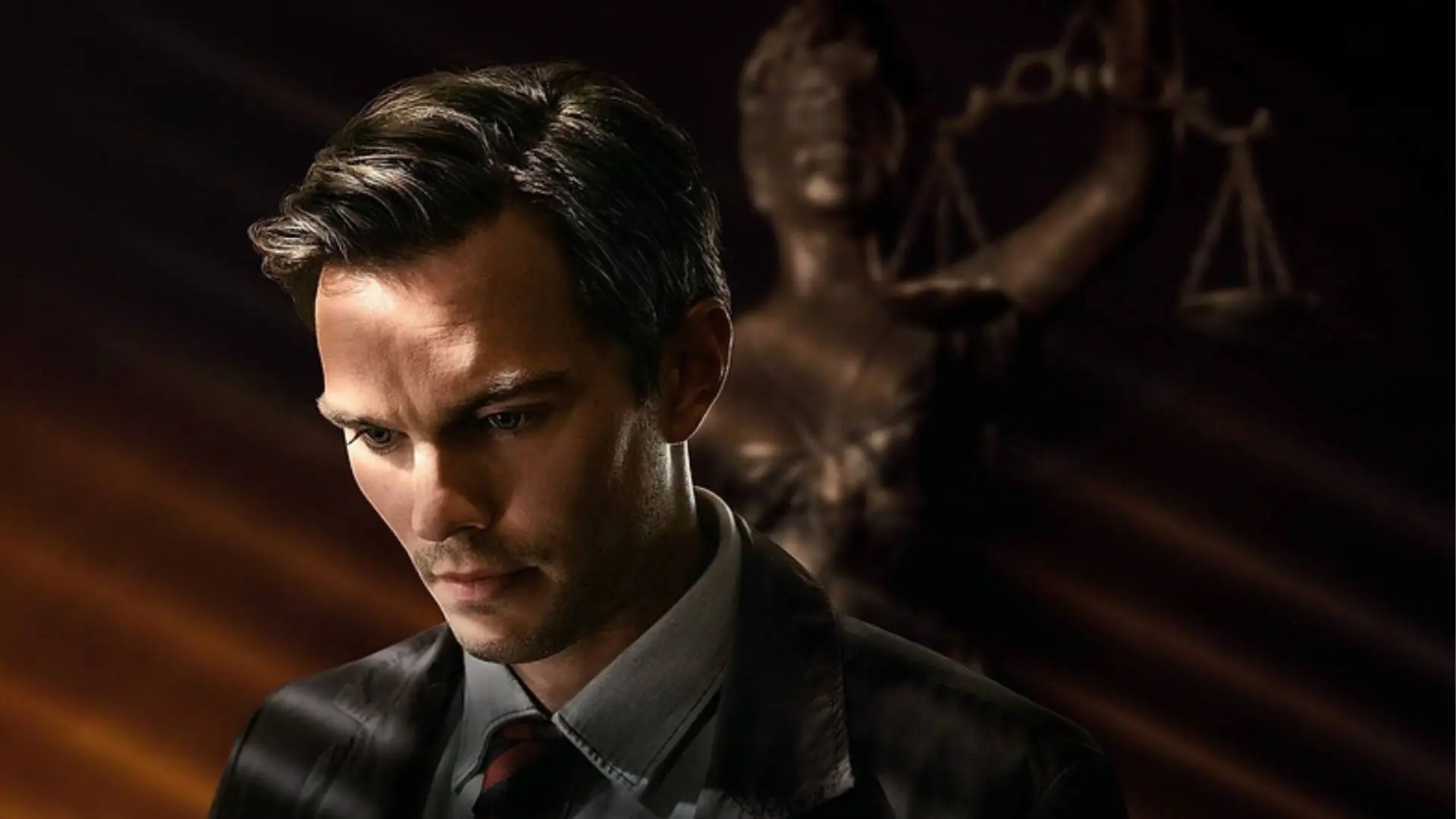
"Juror Number 2": a bold dilemma for an audience accustomed to the childlike simplicity of superhero films. (Photo: Disclosure/Warner Bros. )

Moral dilemma

  And I'll start with the film's excellent moral dilemma. Don't worry, this isn't a spoiler or anything. The situation becomes clear right at the beginning, when Justin (Nicholas Hoult), the titular juror number 2 , realizes that he may be, oh, who am I kidding, he 's the one responsible for the death of a young woman. It was an accident and all, a hit-and-run in an area where deer often cross the road, but it's for this crime that James Sythe is being tried.

What would you do?

  Here the film makes no effort to be subtle and asks you: what would you do in Justin's shoes? Before you start beating your chest and saying that you would confess, however, let me mention a few circumstances that make the confession even less straightforward. First, Justin has a history of alcoholism, including being involved in serious accidents. We, the audience, know that he has been sober for a few years. But we are not the ones to judge .

Circumstances
  
  To make matters worse, on the day of the accident Justin suffered a terrible loss and so he stopped at a bar. He ordered a glass of whiskey, but didn't touch it. Again, we, the viewers, know this. And a third circumstance: Justin's wife is expecting a baby, in a high-risk pregnancy. In other words, he is starting a family and is a reformed man, while Sythe, unjustly accused of his girlfriend's death, has already gotten involved in drug trafficking and so on.

Curious

  With that dilemma in mind, it's time to talk about some other aspects of the film. For example, the nod to the masterpiece “Twelve Angry Men ”. Regarding this, I just found it curious that screenwriter Jonathan A. Abrams had to turn a juror into a criminal in order to raise the possibility that Sythe was innocent. After all, if it were just based on the evidence, the witnesses' words and the defendant's past, frighteningly, the doubt would have gone unnoticed by everyone. Including the viewers and juror number 2.

The ending (maybe with spoilers)

  And now the moment I've been putting off has arrived: the time to talk about the ending of "Juror Number 2". It's an open ending, which forces the viewer to imagine what happened to those involved in the plot. That's why it's also an ending that has upset a lot of people. Not me, as you've probably noticed. After all, I love imagining it – as you've probably noticed .

In God We Trust

  In any case, I want to draw your attention to one specific shot . A few seconds in which Clint Eastwood gives a close-up of the United States' national motto: In God We Trust. For me, this is the key to understanding what the director and screenwriter wanted when they dared to propose an open ending for an audience accustomed to the crude and childish Manichaeism of superhero movies .

Compassion

  Does it have to do with belief in the American justice system? Yes, it does. But it mainly has to do with belief in divine justice, which is not restricted to the ideas of punishment and revenge, and which must necessarily include the notion of mercy . In other words, by abandoning themselves to God's will, Justin and the prosecutor, whose name is not coincidentally Faith Killebrew, will have to believe that a mild or severe punishment, or even an unlikely acquittal, are the best that God has in store for him and his family. Oh, and for the prosecutor's political career too.

Illusion of control

  But that's easier said than done, right? Now, if we have difficulty abandoning ourselves to the divine will in tiny aspects of life, such as a decision at work or in marriage. If even in politics it anguishes us that we don't have the illusion of control... That's why it's difficult not only to put yourself in Justin's shoes, but also to judge him good or bad, intelligent or stupid , clever or foolish and, above all, guilty or innocent of be who he is – and even more so in these circumstances.

Writer: Paulo Polzonoff Jr.


Copyright © 2024, Gazeta do Povo. All rights reserved.

Tuesday, December 10, 2024

Who was Harry Haft, the boxer who literally had to fight for his life in Auschwitz

  It was boxer Harry Haft who struck the first blow. In the opening minutes, he stood firm against his opponent, rising star Rocky Marciano, who was in his 18th fight as a professional. He lost his rhythm in the second round and, in the first half of the third, he went to the canvas after suffering a sequence of accurate blows. Marciano, the unquestionable winner, would later win the title of world champion, in 1952, and would maintain it until 1956, when he retired with 49 victories, 43 of which were by knockout, and no defeats.  

  Haft would never fight again – that contest held at the Rhode Island Auditorium, on July 18, 1949, would be his last. After an impressive start, with ten straight victories, he ended his career with 19 fights, 12 wins and 8 losses, all by knockout. Afterwards, he opened a grocery store that would support him throughout his life. 

Scene from “The Fight of a Lifetime” (2022), a film by Barry Levinson that tells the story of Haft.| Photo: Disclosure/Diamond Films

  But the truth is that his career as a fighter did not begin in August 1948, when he overcame his first opponent, Jimmy Letty. Haft had learned the profession during World War II. And in the cruelest way imaginable. 

  An inmate of the Auschwitz concentration camp, he was selected by a Nazi state police officer, the SS, named Schneider, to box at the nearby Jaworzno facility. He seemed to have the ideal body type for the mission and his right punches had the power to confuse his opponents. The rules of combat were simple: whoever finished standing survived and received an additional share of food and, eventually, a cleaner bed until they recovered from their injuries and prepared for the next sequence of clashes. There was no time limit for disputes. In other words, he was selected to fight in fights, as is still done today, clandestinely, with roosters and dogs.

  Forced to fight for his life, Haft overcame an estimated 75 opponents, all imprisoned like him, including some who had become friends. When he entered the ring to compete against Rocky Marciano, he wore shorts with a Star of David embroidered on them. And he was always introduced to the audience as “the survivor of Auschwitz”. He used the codename to facilitate his identification with the public. But he was uncomfortable detailing how he had managed to survive.

Traumas and struggles 

  Born on July 28, 1925, in the Polish city of Belchatow, with the name Herschel Haft, he was two years old when his father, Maisha, died of typhus. He was raised among seven sisters, who received a Jewish education from their mother, Hinda – she kept weaving equipment at home and the children helped with the work, a very common occupation in the region. 

  His Bar Mitzvah was celebrated in 1938, one year before the occupation of Poland. That's when the persecutions began. Haft lived off small smuggling, which helped bring money and food to his family, in a context marked by the worst possible conditions of violence. One episode, in particular, left a deep impression on him. “My older sister had a daughter. Just two hours later, German soldiers took the baby and threw it into a truck. On this day, I lost my faith. He was a human being with just two hours to live, and he was ripped from his mother and discarded to die”, he would report in an almost two-hour testimony recorded in March 1995.

  From 1942 onwards, he and his entire family found themselves detained and sent to different concentration camps. Haft was taken to Auschwitz, where he received his prisoner's tattoo. After a few weeks, he began to count on the protection of Officer Schneider, who prepared him to fight and organized a betting scheme. “We needed to entertain the Germans. I did what I needed to do and survived,” he said in his 1995 testimony. 

  When the camp in Jaworzno was dissolved due to the advance of the Red Army, the so-called death march began towards Germany. Haft escaped in April 1945. While escaping, he killed a German soldier who was taking a shower. He put on his uniform and spent the remaining weeks, until the end of the war, hiding from village to village. In one of them, he killed two elderly people who sheltered him on a farm – he suspected that his cover had been discovered.  

  For the next two years, he lived in a US-operated refugee camp inside occupied Germany. In January 1947, he won a Jewish boxing championship organized by the American army in Munich. In 1948, with the help of an uncle who lived in New Jersey, he emigrated to the United States. In November 1949, he married Miriam Wofsoniker, with whom he had three children. 

  Haft left Auschwitz, but Auschwitz never abandoned him. Until the end of his life, he suffered from constant nightmares and bouts of panic and violence. His screams in his sleep accompanied him until the end of his life and left a deep impression on his family.

Biography and comics 

  In 2006, the eldest son, Alan, published a biography of his father, Harry Haft - Survivor of Auschwitz, Challenger of Rocky Marciano (“Harry Haft – Survivor of Auschwitz, Challenger of Rocky Marciano”, without translation into Portuguese). Based on two days of testimonies, collected in 2003, which yielded 20 tapes, the book details boxing matches held, generally on Sundays. In general, Haft faced more than one opponent per round, most of them in a regrettable state.  

  “The first opponent was brought into the ring. Harry was shocked by his appearance. He saw before him a half-dead skeleton of a man. It was clear to him at that moment that there would be nothing fair in this fight. Harry was eighteen, big and strong. Schneider kept him well fed without excessive work or torture. Harry looked across the ring and saw the fear on his challenger's face, and he knew this man had not volunteered."

  “Harry looked at the soldiers watching the ring. There was a strange sense of joy in the crowd. They were waiting for the show. It would be a sport to watch a Jew kill another Jew. Almost everyone was sitting down when the soldier acting as referee ordered: ‘Go’”, the report continues.

  “Harry could see that his opponent was defenseless and hesitated. He could hear the soldiers shouting anti-Semitic slurs at them. Harry knew what they were shouting. They were rooting for him to kill the other Jew with his fists. He was sure they would shoot him if he refused. So he obeyed. The first time Harry knocked the other man down, the referee had to catch him. The second time Harry knocked him down, he was unconscious and was carried away. Schneider offered Harry a drink of his whiskey as a reward, but he refused. The fight barely lasted five minutes.” At this time, the sequence of victories led the Nazi audience to nickname Haft a “Jewish animal”. 

Hollywood production 

  The book inspired a highly acclaimed comic book version. And, mainly, the film The Fight of a Lifetime, released in 2022, directed by Barry Levinson, the same director as Rain Man, Good Morning, Vietnam and Mere Coincidence, with actor Ben Foster in the lead role.  

  The production tells the horrors of the concentration camp, but also tells the story of the search for a bride, also detained during the war – he would eventually find her, in the 1960s, when they were both already married to other people and she was on the verge of death. The fight against Rocky Marciano, in fact, would have been scheduled as a way to achieve the necessary notoriety so that Haft's name would appear in the newspapers and the news would reach the girl.

  As reported in a report in The New York Times produced at the time of its release, the production of the film involved descendants of other Holocaust victims, “including two actresses who are granddaughters of survivors, and the screenwriter, Justine Juel Gillmer, whose maternal grandmother served in the Danish resistance that rescued the majority of that country's Jews. Matti Leshem, one of the producers, is the son of a Czech who during the war was forging documents that were used to provide Jews with Christian identities. His father was unable to persuade his mother and sister to flee, and they perished in Auschwitz and Terezin.” As Leshem stated, “Harry Haft was the most extreme example of someone who had to create a morally unsustainable life for himself or die.” 

  Ben Foster's grandmother immigrated from Ukraine in the 1920s to escape Soviet persecution. And the director himself was attracted to the plot because it awakened his memories of the time when, for a few weeks, he slept in the same room as his great-uncle, Simcha. He was six years old and was impressed by the familiar: “Every night, he would wake up screaming and screaming in a language I didn't understand — over and over again. Some people are haunted and can't get over it, and it affects their relationships with the people around them.”

  In 2007, months before he died of lung cancer at age 82, Haft was inducted into the National Jewish Sports Hall of Fame. A journalist asked if he had any regrets. He looked at his fists and said, “My regrets are the lives that passed through these hands.”


Read more at: https://www.gazetadopovo.com.br/ideias/quem-foi-harry-haft-boxeador-literalmente-precisou-lutar-vida-auschwitz/ 

Copyright © 2024, Gazeta do Povo. All rights reserved.
Sunday, December 8, 2024

Who wins and who loses with the fall of Assad in Syria

  The change of power in Syria, a major geopolitical player in the Middle East, sends waves of uncertainty across the region. With the deposition of dictator Bashar al-Assad after a devastating offensive by several rebel groups, the main of which is the Organization for the Liberation of the Levant (HTS, in its Arabic acronym), it is still unknown who will actually occupy power in the country. , whether temporarily or permanently; in a video released this Sunday, Prime Minister Mohamed Ghazi al-Jalali stated that he is willing to work with the insurgents to stabilize the country. Even so, based on all the alliances built by Syria during the Assad regime, it is possible to assess who are the main beneficiaries and harmed by the end of his dictatorship.


Syrian rebel in the city of Homs celebrates the end of Bashar al-Assad's dictatorship. (Photo: Bilal al-Hammoud/EFE/EPA)

Uncertain: The Syrians themselves

  Syrians took to the streets to celebrate the end of the Assad dictatorship, a regime characterized by human rights violations, repression of freedoms, massacres and even the use of chemical weapons against its own population. However, the possible scenarios for a post-Assad Syria are as diverse as possible: in the most benign of them, the victorious forces of the civil war reach an agreement and allow the population to decide the country's fate; at its worst, civil war continues, with various groups trying to take the deposed dictator's place.

  Those who have the most to fear at the moment are the Alawites, members of a branch of Islam that corresponds to just 12% of the population, but to which Assad belonged and who occupied a large part of the positions in the government, and who could quickly become the target of a reckoning. The Kurds, who gained some autonomy during the civil war, will also have reason to worry if the new Syrian government is strongly influenced by Recep Tayyip Erdoğan's Turkey, which helped the rebels and which strongly represses the Kurds within their country. Other minorities, such as Christians and Druze, are waiting to see whether HTS will maintain the tolerance demonstrated in Idlib, a region that has been in its power for the longest time, or whether it will show its strength if it definitively assumes power in Syria – the group is considered a terrorist organization by the United States and the UN.

Loser: Russia

  Vladimir Putin, the most powerful of the deposed dictator's allies, saved Assad's skin in 2015, but was no longer helping his Syrian colleague as he was more committed to his own war, which began in 2022 with the invasion of Ukraine. Russia's recent participation has been limited to a few airstrikes in the north of the country to try to contain the rebel offensive; on Friday, the 6th, the Russian embassy had sent a warning to its citizens to leave Syria as soon as possible. Putin has a vital interest in Syria: the only Russian naval base outside the territory of the former Soviet Union is located in Tartus, on the coast of the Mediterranean Sea, obviating the need for Russian ships to cross the Black Sea and the controlled Bosporus and Dardanelles straits. by Turkey (which is part of NATO). The future of relations between Syria and Russia is still uncertain: shortly before Assad's fall, Foreign Minister Sergei Lavrov referred to the rebels as “terrorists” whose victory would be “inadmissible”; Now, he will try to convince the new government that it was no longer so committed to protecting the former dictator, but sheltering him on Russian soil should not make Putin gain points with the future Syrian government.

Loser: Iran

  Iranian Shiite militias joined the Russians in 2015 to prevent a rebel victory, and the two countries have further strengthened their ties since then, to the point where they are the only two states to be part of the so-called Axis of Resistance, in opposition to Israel and the West – the other members are Hezbollah, Hamas and the Yemeni Houthis. Even so, in the final moments of the rebel offensive, Iran also did not commit to saving Assad, preferring to withdraw its people from Damascus. With Hamas and Hezbollah already greatly weakened by Israeli actions, the fall of Assad further reduces Iranian influence in the Middle East. According to Danny Citrinowicz, a member of a working group on Iran at the Atlantic Council, the end of the Assad regime will force Iran to review its strategy of confronting Israel and the West, which could even lead to an acceleration of its nuclear program. , either to actually obtain a bomb, or as a means of bringing Western powers to the negotiating table.

Loser: Hezbollah

  The terrorist group that torments Israel in the north had already lost numerous of its leaders in Israeli surgical strikes in the Jewish State's recent counteroffensive. Throughout the Syrian civil war, Hezbollah has sent fighters to fight alongside the Syrian army. But, without Assad, the group loses an important intermediary in obtaining Iranian support and will become even more vulnerable to Israeli attacks.

Winner: Israel

  Israeli Prime Minister Benjamin Netanyahu celebrated the fall of Assad and claimed part of the responsibility for having weakened the former Syrian dictator's allies, thus allowing the rebels to finally achieve the success that had eluded them on previous occasions. However, as evident as the Israeli gain is with the fall of an ally of Iran and Hezbollah, two of Israel's greatest enemies, the uncertainty about what will be done in Syria without Assad does not allow for more definitive conclusions. A possible “side effect” of the fall of Assad and the weakening of Hezbollah, according to the Politico website, is the “normalization” of the situation in Lebanon, which is certainly in Israeli interests.

Winner: Türkiye

  While Israel wants credit for weakening Assad's allies, Turkish autocrat Recep Tayyip Erdoğan has supported the rebels since the early stages of the civil war, as part of a broader geopolitical conflict in which Turkey is vying for influence with Iran. From this angle, any change that diminishes the international power of the ayatollahs' regime benefits Erdoğan. A new government that is more hostile to the Syrian Kurds will also weaken the Kurds in Türkiye, which is also in Erdoğan's interest.

Possible winners: United States

  As much as the fall of Iran's ally is automatically beneficial to the United States, the country will have to act quickly if it doesn't want the new Syrian government to end up in another sphere of influence that is also hostile to the United States, says Joze Pelayo, associate director of the Atlantic Council's Middle East Security Initiative. For Pelayo, the United States needs to take advantage of the rejection of Iran and Russia, Assad's supporters, to make itself available to the transitional government in organizing clean elections, and strive to make Syria an element of stability in the Middle East, which will be beneficial to Israel. However, shortly after Assad's fall, President-elect Donald Trump wrote on his social media profiles that the US should not get involved in the Syrian chaos. “This is not our war,” he said, casting doubt on the North American ability to take advantage of the opportunity.


Read more at: https://www.gazetadopovo.com.br/mundo/queda-de-assad-siria-quem-ganha-quem-perde/ 

Copyright © 2024, Gazeta do Povo. All rights reserved.